A Tale Spanning Two Hemispheres
A long long time ago, an illiterate poor farm labour living in a rural part of Ireland could only dream of a better life. His name was Oliver. He had just turned 23, and the year was 1876. But one day, he met a dreamy young servant girl who offered him hope.
While Oliver was the third son of a peasant farmer in County Tyron, she was Margaret’s only daughter. A real dreamer without a father and who Oliver courted and tantalised through tales of an untamed land called Aotearoa / New Zealand, with riches of gold and the promise of a long white cloud. While Oliver was careful not to scare her with fear of the native [indigenous] Māori people who occupied this land, he longed for a better life.

The romance quickly blossomed, and after a few short months, Oliver was married to the attractive and dreamy servant girl. On their honeymoon night, as he whispered sweet nothings, Oliver said,
“Let’s be brave; seek a better life far away from our oppressive English masters”.
He had a cunning plan, which remains a family secret to this day. With the plan put in motion, three weeks later, Oliver and his new bride set sail on a ship called the Fernglen. With strong tailwinds, they safely arrived 106 days later in New Zealand, dropping anchor on the East coast of the North Island by a town called Napier.

Within a few days, they travelled first by stagecoach, then by horseback and finally by foot traversing large mountain ranges to end their journey in a remote part of this land. Oliver’s wife was already pregnant by the time they arrived and when Earnest was born, he was the first white Pakeha European baby the local Māori had ever seen. Over the next two decades, they worked hard and were blessed with 14 other healthy children. Sadly, two others did not survive. The rest, as they say, is history!
Of course, history had yet to decide on the fate of the colonised Māori.
A lot happened over the proceeding years, including a tragic death and Napier’s destruction in 1931 in what remains New Zealand’s largest earthquake. However, 138 years later, Oliver’s Great Grandson, Mark, travelled back to his ancestral Celtic home. He was Molly’s Grandson, Oliver’s youngest daughter, who lived to the age of 99 and bore the fruits of the courageous decision to seek a better life.
It was a long 27-hour flight to Dublin, where Mark and his partner would start exciting new chapters of their lives. In Mark’s case, he was soon to begin a new job as a full Professor and Director of the new National Institute for Digital Learning (NIDL) at Dublin City University. Oliver would have been proud of Mark if he still lived, as he was the first in their family to complete a university degree.
Life in Ireland was good craic as people shared a similar mindset and heritage shaped by colonisation. Yes, there was a lot of rain, and sunshine was at a premium but they lived the European dream whilst Brexit cut yet another tie to the UK. While a global pandemic occurred towards the end of the first decade, known as COVID-19, good Irish Whiskey and lots of Guinness got Mark through the darker days!

It was a different story by the start of the second decade. Two dramatic events changed the course of this tale. First, Russia declared war on Ukraine. It was a nasty, painful and reprehensible war. Sadly, faceless drones and long-range missiles sent by an imperialist aggressor from Moscow killed thousands and put the land in darkness for months. It didn’t take long before Ireland was home to thousands of men, women and children fleeing Ukraine for a better life.
While no one predicted the end of this brutal war, it happened quickly. Towards the end of 2022, a new AI technology called ChatGPT-3 was released to the unsuspecting public. The chain of events was dramatic as the so-called leading-edge technology started an even more powerful war on humanity. It was a digital battle over language and a serious war seeking to exert gain and control of the mind!

Initially, testing ChatGPT’s (un)intelligence with silly questions was fun. Humans foolishly underestimated what they were playing with as the system quickly got smarter. It contained clever code with hidden algorithms to indoctrinate the masses to accept ignorance as strength at a time of great uncertainty, especially as people were coming to terms with living in a time of war. And one day, an ignorant older man called Trump, who claimed to own ‘the truth’, asked the Bot…
“Under what circumstances would Putin end hostilities in Europe?”
The answer was remarkably simple. War is peace! The rest is history…
It was tough living in peace-torn Ireland. Mark couldn’t speak Russian, so these were difficult dark and largely disconnected times. And it didn’t take long for AI to quickly learn the art of propaganda and colonise anything resembling critical education. Despite trying his best to subvert machine learning one byte at a time, it was a losing battle.
Then, one day, Mark overheard a visiting Russian pilot having a private conversation in a Dublin pub, which offered a lifeline. After several too many drinks, the pilot told a local comrade conspiring with the enemy an enticing story from his recent outer-space experience. He talked of untamed land, riches of minerals and the promise of a long white galaxy leading to a dwarf planet known as New Zoomland. This was just one of the big secrets Putin had kept from the world.
Mark rushed home excitedly to his wife. Was this a sign? Was the future in the stars? Could this be a galaxy to a better life? Mark set about hatching a plan. But courage and cleverness were needed to beat the intelligent machines. So, Mark stole one of the university’s laptops, which had been locked away in the President’s Office since the outbreak of peace, quietly made his way down the corridor to his office, and logged into ChatGPT-13. He found his password, keyed in his old security code and waited. However, the system was clever. It told him he was no longer the NIDL Director; he was a bot imposter!
His body went as weak and translucent as jelly.
The real Bot wouldn’t allow him to ask how to wrangle a seat on the next rocket to New Zoomland. What was his plan B?
What happened next came as a shock. The AI system shut down, and the number “1984” appeared on the laptop screen. Minutes later, his office door burst open, and Mark was forcibly removed from his chair and carried away by two government AI Enforcers whose job was to enslave people for their freedom.
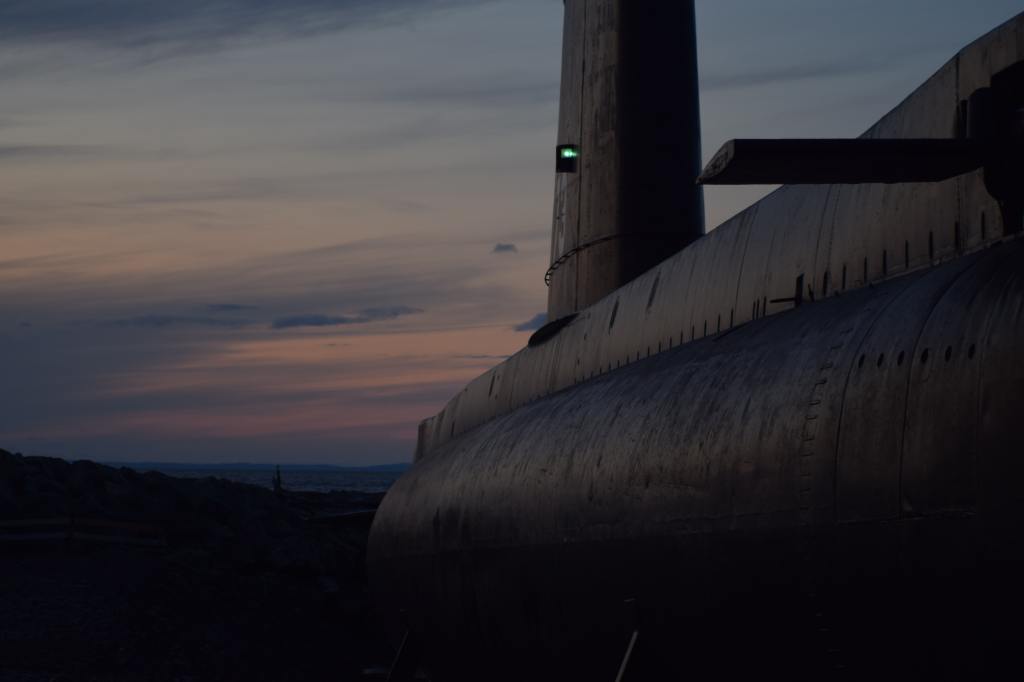
Three weeks later, shackled in chains in the hold of “SeaX”, a reconditioned electric submarine the Russians purchased at a bargain price from Elon Musk, they dived into the unknown. It was a slow journey due to the remnants of war and unfavourable currents, but 106 days later, Mark surfaced near a remote, inhospitable island called New Diemen’s Land. He was quickly taken to a secret location to start his intensive programme of re-education. While Mark was a fighter and giving up his remaining doublethink to the powerful new machines was not in his DNA, trying to beat the brutal brainwashing bots was a hopeless cause.
At least Oliver would have been proud of him as Mark held out as long as he could; but deep down, his genetic code was slowly broken in the knowledge that the new peace would not bring humanity happiness. On a bright day in April, when the clocks were striking thirteen, Mark died painfully trying to break free of his chains. Sadly, he left his wife back in Ireland to find strength in the new ignorance of the AI age.
The rest is history…
Footnote: Before you think I’m losing my mind, make sure you read the first blog post in this series, as this helps frame the context behind this story. And you need to read Fanny’s previous story to see how they end so differently. Lastly, watch for the final post in this series coming soon, as this gives a Postscript from the grave explaining what I was trying to say through the metaphor of doublethink. Only then can you truly judge whether I’ve lost my mind!

 Mark Brown
One thought on “Looking Back to the Future: Doublethink in the Age of Artificial Intelligence – Part III”