This is the first in a series of four blog posts that share two unique and very personal speculative fiction on education futures in the new age of Artificial Intelligence (AI). The posts tell two parallel but distinctly different tales. Both stories are authentically grounded in ancestorial family history, with a strong dose of indigeneity, coloured by the spectre of colonisation and a fear of being caught in the act of doublethink. For those unfamiliar with the term…
“Doublethink means the power of holding two contradictory beliefs in one’s mind simultaneously, and accepting both of them”.
(Orwell, 1961, p. 214).

This concept resonates with me at a time when many of us are grappling with the challenge of trying to embrace the potential of AI in our educational institutions, local communities and societies whilst raising serious ethical and moral questions about what it now means to be a rationale human in the 21st Century.
The first story begins with the tale of Fanny and offers a more hopeful future. However, it also reveals through a tinted colonial lens that no future is benign. Notably, this future ends beyond the realm of Earth and builds on the human drive to discover, look past horizons, and push new boundaries to new places. The decision to begin with this hopeful future is partly a response to the recent call to redress the tendency towards more negative, pessimistic, or apocalyptic stories of the future (Houlden & Veletsianos, 2022). The story also takes us back beyond the present and shows how imagined futures are both fictional and nonfictional in nature. The difference in this case, however, is the deliberate fusing of fiction and nonfiction to tell an entangled story about the past and the present whilst also carrying a telescope that looks to the stars for a more hopeful or enlightened future.
The second story of Oliver is more firmly set in an apocalyptic genre. It begins with a journey of hope but is cast in a dark shadow of a battle over language and a bigger war over who will control the mind. Again, to quote from Orwell’s 1984…
“If both the past and the external world exist only in the mind, and if the mind itself is controllable – what then?”
(Orwell, 1961, p. 80).
This is not a new war, but we see how new technological developments continue to drive, serve, and redefine the art and machinery of modern warfare. One can only ponder what type of new warfare will emerge from the age of AI? Not surprisingly, given the current situation in Europe, where history is repeating itself, the two stories are framed by this geo-political backdrop.
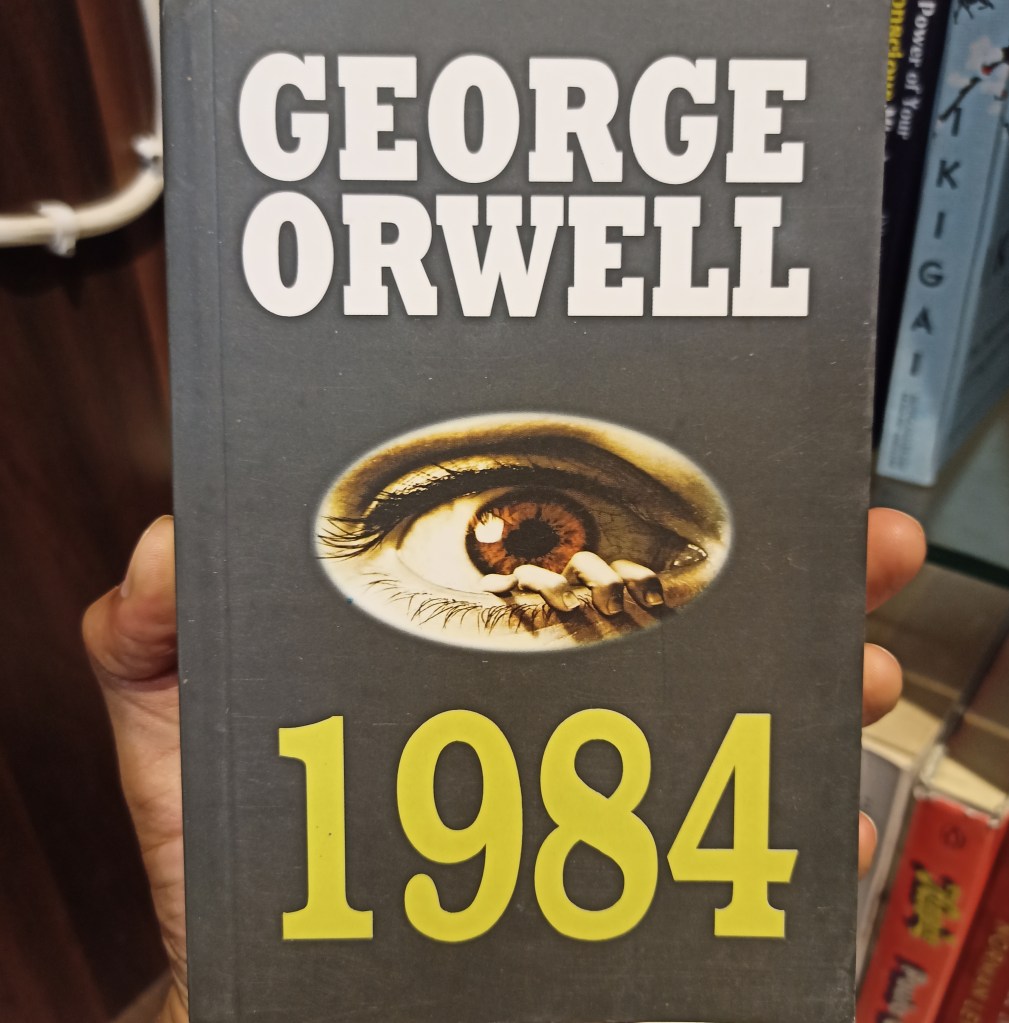
Importantly, in the final of these four blog posts, the stories come with their own interpretive guide. A postscript explains some of the thinking behind each story and shares personal misgivings about the growth of speculative fiction methods in education when claiming to reflect less white, more inclusive, and greater diversity of possible futures.
On this final critical note, there is no better way to introduce the stories than through one of the most influential books of my time and famous quotes from 1984:
“War is peace.
Freedom is slavery.
Ignorance is strength,”
(Orwell, 1961, p.4).
Watch for the next post to read Fanny’s story…
 Mark Brown
2 thoughts on “Looking Back to the Future: Doublethink in the Age of Artificial Intelligence – Part 1”